
 On December 11, 2017, the King County Public Health Department (“DOH”) announced that they were investigating an outbreak of salmonellosis associated with the Miller’s Guild restaurant in Seattle, Washington. Six persons from four separate meal parties became ill after eating at the restaurant on different dates from August 15, 2017, to November 3, 2017. One of the ill persons was hospitalized and has since recovered.
Laboratory testing and genetic identification has indicated that three of the ill persons were infected with the same strain of Salmonella bacteria—Salmonella Braenderup—thereby strongly suggesting a common source of infection.
As part of the DOH investigation, Environmental Health investigators visited and closed the restaurant on November 21, 2017. During the field inspection, potential risk factors, such as practices that contribute to the risk of cross contamination, were identified, and several environmental samples were collected for. Salmonella was not found in environmental samples collected form the restaurant on November 21. However, epidemiologic and laboratory evidence from ill persons indicated that food served at Miller’s guild was the likely source of the outbreak.
On November 27, 2017, the DOH was notified of an additional ill person infected with Salmonella after eating at Miller’s Guild restaurant between October 15 and 21, 2017. The ill person was an employee at Miller’s Guild, but there was no evidence indicating that the person was the source of the outbreak.

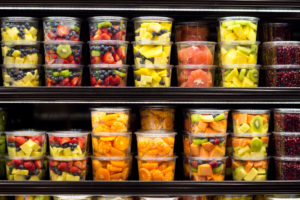 Caito Foods is voluntarily recalling fresh cut watermelon, fresh cut honeydew melon, fresh cut cantaloupe and fresh cut mixed fruit containing one of these melons, produced at the Caito Foods facility in Indianapolis because these products have the potential to be contaminated with Salmonella Carrau, an organism which can cause serious and sometimes fatal infections in young children, frail or elderly people, and others with weakened immune systems. Healthy persons infected with Salmonella often experience fever, diarrhea (which may be bloody), nausea, vomiting and abdominal pain. In rare circumstances, infection with Salmonella can result in the organism getting into the bloodstream and producing more severe illnesses such as arterial infections (i.e., infected aneurysms), endocarditis and arthritis.
 Food regulators, health authorities and Chief Veterinary Officers in Australia are investigating a rare strain of Salmonella (Salmonella Enteritidis) associated with human illness and egg consumption.
 In May 2017, Government of Canada scientists began using a new technology called “whole genome sequencing” to help identify and respond to outbreaks. Since that time, federal, provincial and territorial health and food safety partners have investigated 17 national outbreaks linked to raw chicken, including frozen raw breaded chicken products. In total, there have been 14 food products linked to these outbreak investigations. The Canadian Food Inspection Agency has issued