Memphis Father & Son Sue A&R Bar-be-que, LLC After Suffering Salmonella Poisoning

A lawsuit stemming from the recent outbreak of Salmonella illnesses was filed today in the Circuit Court for Shelby County, Tennessee against A&R Bar-be-que, LLC. The lawsuit was filed on behalf of a Memphis father and son by Seattle foodborne illness law firm Marler Clark and by John Day of the Tennessee firm Day & Blair.

Foodborne illnesses reported to the Shelby County Health Department by patrons of the A&R Bar-be-que restaurant at 3701 Hickory Hill Road prompted the Health Department to launch an investigation on July 14.  The restaurant closed on July 25 and remains closed at this time.

Eric Phillips Sr. bought food at the Hickory Hill A&R Bar-be-que on July 9, 2009. He and his son ate food from the restaurant on July 9and 10. On Friday, July 10, the 15-year-old began to feel nauseous and ill. His condition worsened over the weekend, and he was taken to the doctor on Tuesday. The doctor instructed the family to keep the boy hydrated, and he was sent home. However, his symptoms increased in severity and he experienced vomiting, nausea, and diarrhea over the next few days. On the following Monday, July 20, his mother took him to Le Bonheur Children’s Hospital, where he was admitted and diagnosed with Salmonella.

Meanwhile, Eric Phillips Sr. was experiencing similar symptoms over the same period of time. He was eventually admitted to Methodist Germantown Hospital in Memphis.

Both father and son suffered acute kidney failure as a result of their Salmonella infections, requiring extensive medical treatment, including dialysis. They both remain in the hospital. 

 “The impact on this father and son—and family—will be life-long,” said the family’s attorney, Andy Weisbecker. “No one can change that, but what we can do is to make sure that they have a way to pay for the care they will need.”

Salmonella is a bacterium that causes one of the most common intestinal illnesses in the US: Salmonellosis. It can be present in uncooked or undercooked meat, poultry, eggs, or unpasteurized dairy products, as well as other foods contaminated during harvest, production, or packaging. Symptoms can begin 6 to 72 hours from consumption, and include diarrhea, abdominal cramps, fever, nausea, and/or vomiting.  Dehydration is a concern, especially with the elderly, very young, or immune compromised. 

“Anyone experiencing these symptoms should ask their healthcare providers to culture a stool sample,” continued Weisbecker. “The culture will indicate if Salmonella is present and can assist in determining if the illness is part of a larger outbreak.” 

ABOUT MARLER CLARK: Marler Clark has represented victims of every major food borne illness outbreak since 1993.  The firm’s attorneys have litigated high-profile food poisoning cases against such companies as ConAgra, Wendy’s, Chili’s, Chi-Chi’s, and Jack in the Box.  Marler Clark currently represents thousands of victims of outbreaks traced to ground beef, tomatoes, peppers, lettuce, peanut butter, and spinach, as well as other foods.  For further information contact Mary Siceloff at msiceloff@marlerclark.com or (206) 719-4705, or visit www.MarlerClark.com and www.marlerblog.com.

One "Lot" Of Cilantro Recalled By Frontera Produce; Keeps Retailer List Secret

Frontera Produce, of Texas, is recalling a lot of cilantro that may be contaminated with Salmonella, according to The Packer.    Frontera is not, however, releasing  to the public the names of the retailers that received the recalled lot.  According to the story:

Frontera identified the lot as 118122, and said it was distributed to two retail chains that have stores in Texas, Oklahoma, Colorado, Louisiana and New Mexico.  Frontera did not identify the retailers.

Frontera said it has advised both supermarket chains of the situation and provided each with case tag identification.

Consumers are advised to destroy the cilantro which could have been purchased between July 20-27.

The cilantro bunches have a white twist tie with pink lettering spelling the word ‘Cilantro’ and the Universal Product Code number 033383801049. 

If Frontera is honestly trying to have consumers heed the recall, they need to provide the names of the retailers.   And FDA should be requiring the information to be public as well. 

Frontera was previously named as a defendant in litigation following last summers SalmonellaSaint Paul outbreak.   In that case, the plaintiffs' left-over jalapeno peppers, purchased at Wal-Mart, tested positive for Salmonella Saint Paul.   Wal-Mart disclosed that the peppers in question were distributed by Frontera.

King Soopers Recall First Time Ground Beef Recalled For Salmonella; And Strain Is A Dangerous One.
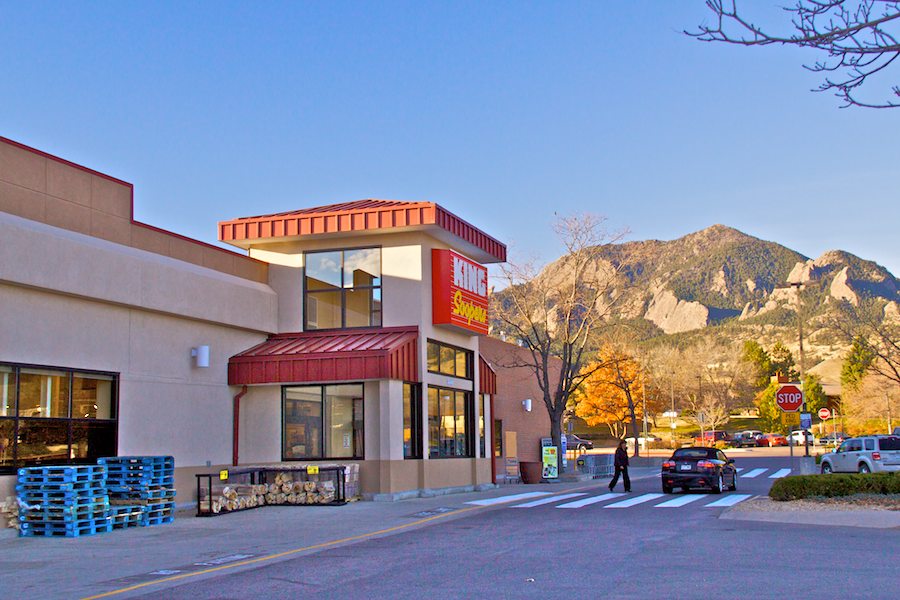
The 466,236 pound recall of ground beef by the Denver-based King Soopers grocery chain is going now in the history books as historic for two reasons:

1.  For the first time in history, the United States Department of Agriculture's  (USDA) Food Safety and Inspection Service (FSIS) has recalled ground beef that is tainted with salmonella.

2.  The strain of salmonella involved is resistant both to many antibiotics and to normal cooking temperatures.   The ground beef from King Soopers sickened 14 people in Colorado with a half dozen slow to recover.

The King Soopers ground beef products were produced May 23-June 13 and bear"'EST. 6250" within the USDA Mark of Inspection, printed on the front of the packages.

At the time of the recall, the ground beef was no longer being sold, but customers were urged to check their freezers for stored product.

Salmonella can result in abdominal cramps, diarrhea and fever. Most people recover without treatment, but some require hospitalization. In rare cases, the organism can get into the blood and produce more severe illnesses.

14 Sick In Colorado As Denver-Based King Soopers Grocery Chain Recalls Nearly Half Million Pounds Of Ground Beef For Salmonella Contamination

From the Food Safety & Inspection Service (FSIS) of the United States Department of Agriculture:

WASHINGTON, July 22, 2009 - King Soopers, Inc., a Denver, Colo., establishment, is recalling approximately 466,236 pounds of ground beef products that may be linked to an outbreak of salmonellosis, the U.S. Department of Agriculture's Food Safety and Inspection Service (FSIS) announced today.

The products subject to recall include:

  • 1-pound chubs of (93/7) ground beef. Each package bears the identifying case code "69558."
  • 1 - 1.25-lb. tray packs of (96/4) ground beef. Each package bears the identifying case code "67164."
  • 1 - 1.25-lb. tray packs of (96/4) ground beef. Each package bears the identifying case code "67664."
  • 1 - 1.25-lb. tray packs of (93/7) ground beef. Each package bears the identifying case code "67663."
  • 1 - 1.25-lb. tray packs of (93/7) ground beef. Each package bears the identifying case code "67163."
  • 2.5 - 3-lb. tray packs of (93/7) ground beef. Each package bears the identifying case code "67654."
  • 6-pack trays of (93/7) ground beef patties. Each package bears the identifying case code "67106."
  • 4-pack trays of (93/7) ground beef patties. Each package bears the identifying case code "67115."

The ground beef chub products bear a use-by/sell-by date between "05/31/09" and "06/21/09;" the tray packs of ground beef bear a use-by/sell-by date between "06.02.09" and "06.23.09;" and the ground beef patty products bear a use-by/sell-by date between "06.01.09" and "06.22.09."

The ground beef products were produced on various dates ranging from May 23, 2009 through June 13, 2009 and bear the establishment number "EST. 6250" within the USDA Mark of Inspection, which is printed on the front of the packages. The ground beef products were distributed to retail establishments in Colo., Kan., Mo., Neb., N.M., Utah and Wyo.

FSIS has no reason to believe that these products are still available for sale in commerce. However, consumers that may have purchased these fresh ground beef products between May 23 and June 23, 2009, and have stored them in the freezer should look for and discard or destroy these products.

As a result of an ongoing investigation into an outbreak of Salmonella Typhimurium DT104 associated with ground beef products, the Colorado Department of Public Health and Environment (CDPHE) notified FSIS of the problem.

Epidemiological investigations and a case control study conducted by CDPHE and the Centers for Disease Control and Prevention (CDC) determined that there is an association between the fresh ground beef products and 14 illnesses reported in Colorado. The illnesses were linked through the epidemiological investigation by their less common pulsed-field gel electrophoresis (PFGE) pattern found in PulseNet, a national network of public health and food regulatory agency laboratories coordinated by the CDC.

FSIS would like to remind consumers of the importance of following food safety guidelines when handling and preparing raw meat. Ground beef should be cooked to a safe minimum internal temperature of 160° Fahrenheit.

This particular strain of Salmonella, Salmonella Typhimurium DT104, is resistant to many commonly prescribed drugs, which can increase the risk of hospitalization or possible treatment failure in infected individuals.

Consumers with questions regarding the recall should contact the company Hotline at 1-800-632-6900; media inquiries should be directed to Meghan Glynn, Media Relations Coordinator, at (513) 762-1304.

Consumption of food contaminated with Salmonella can cause salmonellosis, one of the most common bacterial foodborne illnesses. Salmonella infections can be life-threatening, especially to those with weak immune systems, such as infants, the elderly, and persons with HIV infection or undergoing chemotherapy. The most common manifestations of salmonellosis are diarrhea, abdominal cramps, and fever within eight to 72 hours. Additional symptoms may be chills, headache, nausea and vomiting that can last up to seven days.

Consumers with food safety questions can "Ask Karen," the FSIS virtual representative available 24 hours a day at AskKaren.gov. The toll-free USDA Meat and Poultry Hotline 1-888-MPHotline (1-888-674-6854) is available in English and Spanish and can be reached from l0 a.m. to 4 p.m. (Eastern Time) Monday through Friday. Recorded food safety messages are available 24 hours a day.
 

Another Fresh Produce Recall; This Time It's Romaine Lettuce Due To Salmonella


From a Company Press Release:

FOR IMMEDIATE RELEASE
July 21, 2009

Tanimura & Antle, Inc. of Salinas, Calif. is voluntarily recalling one lot of romaine lettuce because it has the potential to be contaminated with Salmonella. No illnesses have been reported to date, and the company is working with FDA to inform consumers of this recall.

Salmonella is an organism which can cause serious and sometimes fatal infections in young children, frail or elderly people, and others with weakened immune systems. Healthy persons infected with Salmonella often experience fever, diarrhea (which may be bloody), nausea, vomiting and abdominal pain. In rare circumstances, infection with Salmonella can result in the organism getting into the bloodstream and producing more severe illnesses such as arterial infections (i.e., infected aneurysms), endocarditis and arthritis. The recall comes after a random test conducted by the Wisconsin Department of Agriculture tested positive.

Within hours of being notified yesterday, Tanimura & Antle, Inc. traced back the entire lot of romaine and advised all customers who received the recalled product of the test result. Tanimura & Antle, Inc. has instructed these customers to destroy the product. Although the recalled product is past its shelf life, the company is issuing this voluntary recall out of an abundance of caution to ensure that any product purchased by consumers will also be destroyed. Consumers who have purchased the recalled romaine as described above should not consume it, and should destroy the product.

The cartons of bulk or wrapped romaine being recalled are marked with the lot code 531380 and were harvested June 25 - July 2. This recall includes only this single lot of romaine; no other products are involved.

The recalled romaine was sold to retail, wholesale and food service outlets in Canada, Puerto Rico and the following 29 states: Alabama, Arkansas, California, Colorado, Connecticut, Florida, Georgia, Illinois, Indiana, Iowa, Kentucky, Texas, Massachusetts, Louisiana, Pennsylvania, Tennessee, North Carolina, Michigan, Missouri, Nebraska, New Hampshire, New Mexico, Nevada, Ohio, Oregon, Utah, Virginia, Wisconsin, Wyoming.

FDA Testing Finds Salmonella Contamination In Fresh Cilantro From Texas Company

The McAllen, TX-based Sweet Superior Fruit Company Saturday recalled 104 cases of fresh cilantro because testing by the U.S. Food & Drug Administration (FDA) was positive for salmonella.

No illnesses have yet been associated with this recall.

The tainted cilantro was sold from July 13 to 16 at the Sweet Superior outlet in McAllen. It was likely sold again at the retail level in the McAllen area or was used to manufacture other food products.

The produce company asks that its customers return the product or throw it away. 

Egg Producers Look To Be More Ready Than Not For "New" Regulations

Some reform, some recycled policies, and something the bureaucracy could dust off and make new.   Those are among the comments that can be made about the recommendations made earlier this week by the President’s Food Safety Working Group.

The “new” are the “public health regulation(s) to improve egg safety and reduce salmonella illnesses.”  

The U.S. Food & Drug Administration (FDA) has published the “final rule” for the regulations in the Federal Register.   They will take effect on September 8, 2009; almost five years after they made their debut as a draft.

During the time between the “draft” and the “final” FDA rule, U.S. egg production has increased to 6.41 billion table eggs annually, up from about 6 billion five years ago. Americans are now eating 250 eggs per person per year, up from 234 five years ago.

And its fair to say, United Egg Producers –the industry association—has used the last five years to get egg farmers ready for tougher safety standards. The U.S. Department of Agriculture funded a UEP study that created the “5-Star” egg safety program. Its five critical points are:

  • Cleaning and Disinfecting of poultry houses
  • Eliminating pests and rodents.
  • Proper egg washing.
  • Biosecurity.
  • Refrigeration at 45 degrees F. from point of packing through delivery.

The “new” FDA rule would require egg producers to:

  • Buy chicks and young hens only from suppliers who monitor for Salmonella.
  • Establish rodent, pest control and biosecurity measures to prevent spread of bacteria throughout farm by people and equipment.
  • Conduct testing in the poultry house for Salmonella Entertidis. If the tests finding the bacterium, a representative sample of the eggs must be tested over an eight week time period (four tests at two week intervals); If any of the four egg tests is positive, the producer must further process eggs to destroy the bacteria or divert the eggs to non-food use.
  • Clean and disinfect poultry houses that have tested positive for Salmonella Enteritidis
  • Refrigerate eggs at 45 degrees Fahrenheit during storage and transportation no later than 36 hours after the eggs are laid.

Thus, in comparing the UEP “5-Star” list with the FDA’s new rule, the real difference between the two is the required sampling program. And as Seattle attorney Denis Stearns recently noted:

"Moreover, hard data does not exist with regard to the prevalence of Salmonella in eggs in the United States, making the estimates about potential savings and illness-reduction speculative at best. As the USDA Agricultural Research Service pointed out in a report issued in 2007:

"Market egg sampling data has never been collected in the United States on a national basis and no regional sampling data has been collected in 10 years. Salmonella outbreaks continue to be attributed to eggs and no progress has been made in several years in decreasing incidence."

FDA estimates the new rule will cost egg producers $81 million a year or less than one cent per dozen eggs. The goal is to eliminate 79,000 Salmonella illnesses in humans annually; thereby preventing 30 deaths.   Health costs will be reduced by $1.4 billion annually, according to the FDA analysis.

Egg producers will more than 3,000 laying hens would be covered by the new regulations. FDA and USDA both regulate egg producers and the new regulations are touted as a coordinated strategy.

Milk Coop's Ingredient Recall Is Growing Rapidly--202 Products To Date

After the Plainview Milk Products Cooperative, located in Plainview, MN, discovered salmonella contamination on its equipment, it asked on June 29th that the ingredients its sold over the past two years to others-- instant nonfat dried milk, whey protein, fruit stabilizers and gums (thickening agents)--be recalled.

The third ingredient recall of 2009 is now growing rapidly.   The Milk Coop did not sell anything to the general public.  "The company sells these products to other industry customers, including distributors and manufacturers, who may have incorporated them into their own products, says the U.S. Food & Drug Administration (FDA), which is maintaining a database of all products being recalled by customers of the Milk Coop.

That database is showing 202 products recalled as of today.  The FDA database is the best place to go for specific product information, including code and lot numbers that you will be to make sure you do not have any potentially contaminated product in your pantry.

Here's a quick run-down on all the Milk Coop related recalls that have come in during the first nine days of July.

  • Landover, MD-based Giant Foods recalled Giant Nonfat Dried Milk in 9.6-ounce size.
  • The Stop & Shop Supermarket Company recalled its Non Fat Dried Milk products in 16 and 32-ounce sizes.
  • Robert St.John recalled its Rich, Rich Hot Chocolate Mix in 13-ounce plastic bags packaged inside metal tin cans.
  • Meijer Brand Instant Nonfat Dry Milk sold in Meijer Stores in Michigan, Ohio, Indiana, Illinois and Kentucky was recalled.
  • McClancy Seasoning recalled Alba Instant Non-Fat Dry Milk (25.6 oz), Alba Instant Non-Fat Dry Milk (9.6 oz), Alba Creamy Milk Chocolate Snack Shake Mix (6 oz), Alba Double Fudge Royale Snack Shake Mix (6 oz), Alba Smooth Vanilla Bean Snack Shake Mix (6 oz) and Alba Strawberry Banana Snack Shake Mix (6 oz).
  • Precision Foods Inc., of St. Louis, Missouri, recalled certain Madagascar Vanilla cocoa. It is labeled as Land O Lakes International Drinking Cocoa “Madagascar Vanilla”.
  • NOW Foods recalled a dozen of its NOW Foods products containing whey protein concentrate.
  • CPI Foods, Inc Dallas, TX recalled approximately 15,000 packets of non-fat dry milk
  • Max Muscle Sports Nutrition recalled Max Muscle products containing whey protein concentrate due to potential Salmonella contamination.
  • Malt-O-Meal Company recalled “Maple & Brown Sugar Instant Oatmeal” and “Maple & Brown Sugar Instant Oatmeal” packets sold in “Variety” cartons.
  • Trans-Packers Services Corp. of Brooklyn, NY, is recalled approximately 6,300 packets of Dairy Shake blends
  • Traditions Meal Solutions recalled approximately 104,500 packets of 25-gram non-fat dry milk packets.
  • Vital Pharmaceuticals Inc. of Davie, Fl recalled 17 lots of the powdered dietary supplement, Stealth Chocolate and Stealth Vanilla,
  • C. F. Sauer Company, of Richmond, VA recalled brown gravy, brown gravy with mushrooms, brown gravy with onions, turkey gravy, pork gravy, country sausage gravy, country style gravy, Alfredo sauce mix, Cajun gumbo mix, and Hollandaise sauce mix produced under the Sauer’s, Gold Medal, and Piggly Wiggly labels because they contain instant non-fat dry that was milk manufactured by the Plainview Milk Products Cooperative.
  • Westport, CT-baded Lewis Laboratories International, Ltd. is recalled Weigh Down Chocolate Flavor Nutrition Drink Mix

Meanwhile, back in Plainview, MN, the Milk Coop says: it "is presently in the process of disassembling all equipment in question for cleaning and is taking other precautionary measures such as the use of anti-microbial surface coatings in order to ensure environmental safety."

Virginia And Texas Communities Combat Local Salmonella Outbreaks

Charlottesville, VA and Lockhart, TX are the latest examples of communities dealing with nasty little outbreaks of Salmonella.

In Central Virginia, a half dozen patrons of the Mona Lisa Pasta Shop were sickened with salmonella that apparently came from frozen lasagna product.

Dr. Lilian Peake of the Thomas Jefferson Health District says the investigation is ongoing.   Peake says her team has not yet officially pinpointed the lasagna as the cause and will look at all possibilities.

“We have to do a thorough investigation of what people were doing, where they ate, where they've been, so that we can really understand what is going on,” she stated.

While the Health District interviews people who ate food from the pasta shop, the Virginia Department of Agriculture and Consumer Affairs is checking out the venue itself.

In Texas, 27 people tested positive for salmonellosis in Caldwell County in the last month. Health officials have questioned all affected, but have not been able to determine the source.

Lockhart -- the proclaimed the barbecue capital of Texas—is seeing people stay away from local restaurants because a specific source of the salmonella outbreak has not been found.   The investigation continues. 

Read more on the Virginia outbreak at WVIR-TV and on Texas at KVUE.

Salmonella Contamination Causes Wegmans To Pull Anaheim Peppers

Wegmans Food Markets, Inc. the 73-store supermarket chain with stores in New York, Pennsylvania, New Jersey, Virginia, and Maryland, is recalling all Anaheim peppers its sold since June 11, 2009.

On July 2nd, Wegmans removed fresh Anaheim peppers from its produce departments due to the possibility of salmonella contamination. The U.S. Food and Drug Administration (FDA) is currently investigating the situation.

Anyone who purchased Anaheim peppers at Wegmans is asked just to throw them away. Refunds are available by contacting a Wegmans customer service desk.

Wegmans is a family owned company founded in 1916. For more information, please call Wegmans Consumer Affairs at 1-800-934-6267, x-4760, Monday through Friday, 8am-5pm.