
In light of shocking revelations disclosed by the FDA about the Peanut Corporation of America’s (PCA) Blakey, GA facility, foodborne illness law firm Marler Clark amended the  Federal lawsuit it had filed against PCA to allege punitive damages. The complaint was filed last week on behalf of Vermont residents Gabrielle and Daryl Meunier, whose son
Salmonella Typhimurium Outbreak Count Now Tops 500
.jpg) The U.S. Centers for Disease Control and Prevention (CDC) reported today that 529 persons infected with the outbreak strain of Salmonella Typhimurium have been reported from 43 states. The number of ill persons identified in each state is as follows: Alabama (2), Arizona (11), Arkansas (5), California (68), Colorado (13), Connecticut (9), Georgia (6),
The U.S. Centers for Disease Control and Prevention (CDC) reported today that 529 persons infected with the outbreak strain of Salmonella Typhimurium have been reported from 43 states. The number of ill persons identified in each state is as follows: Alabama (2), Arizona (11), Arkansas (5), California (68), Colorado (13), Connecticut (9), Georgia (6),
CDC Updates Its Investigation of Outbreak of Infections Caused by Salmonella Typhimurium 2008-2009
Persons Infected with the Outbreak Strain of Salmonella Typhimurium, United States, by State, September 1, 2008 to January 25, 2009

As of 9PM EDT, Sunday, January 25, 2009, 501 persons infected with the outbreak strain of SalmonellaTyphimurium have been reported from 43 states. The number of ill persons identified in each state is
Most Cases/Most Deaths — Salmonella Outbreak Hitting State Of Ohio Hard
Sixty-seven cases of Salmonella poisoning have been reported in Ohio, the most in any state during a nationwide outbreak linked to peanut butter products. The Ohio Department of Health announced Friday that four deaths have been reported among the 67 cases and 19 people have been hospitalized. Across the state, Salmonella has been reported in
Deaths Increase As Likely Cause Is Feces in Peanut Butter
.jpg) It is likely that bird or rat feces in the Peanut Corporation of America peanut butter started all of this. There is the ever-expanding list of Salmonella free products. The FDA list of products containing tainted peanut butter continues to grow as does the list of the deaths. Yesterday Ohio reported four deaths (not
It is likely that bird or rat feces in the Peanut Corporation of America peanut butter started all of this. There is the ever-expanding list of Salmonella free products. The FDA list of products containing tainted peanut butter continues to grow as does the list of the deaths. Yesterday Ohio reported four deaths (not
Peanut Butter Recall Reaches 31 MILLION POUNDS
31,000,000 pounds of Peanut Butter Now Recalled
Stunning, just stunning. we can not keep up with the FDA recall list.
.jpg)
If this does not catch Obama’s attention, what will? Hey, Mr. President, call US, we’ll work for peanuts.
New numbers from the CDC – 488 persons infected with the outbreak strain of Salmonella
Here’s FDA’s One Source Tracker Of Peanut/Salmonella Recalls
 We think the best advice is to just stop eating anything you think might contain peanut butter. It is a small price to pay for avoiding a really nasty bout with Salmonella. The individual company recalls just keep rolling in. If you want to check some product against the master list maintained
Mr. President- Here Are The Blue, Turquoise, & Yellow States:Outbreak of Infections Caused by Salmonella Typhimurium 2008-2009
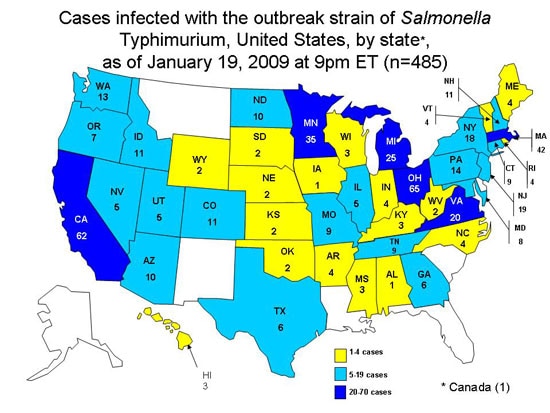
As of 9PM EDT, Monday, January 19, 2009, 485 persons infected with the outbreak strain of SalmonellaTyphimurium have been reported from 43 states and Canada. The number of ill persons identified in each state is as follows: Alabama (1), Arizona (10), Arkansas (4), California (62), Colorado (11), Connecticut (9), Georgia (6), Hawaii (3),
Kroger Recalls Ice Cream That May Be Tainted With Salmonella
All the big chains are rolling in with their peanut butter-related recalls.
Kroger is recalling the following ice cream:
 Private Selection Peanut Butter Passion Ice Cream sold in 48-ounce containers with a "Sell by" date of 9-13-2009 under the following UPC Code Number: 0001111054437.
- Private Selection Peanut Butter Passion Ice Cream sold in 56-ounce containers
 Private Selection Peanut Butter Passion Ice Cream sold in 48-ounce containers with a "Sell by" date of 9-13-2009 under the following UPC Code Number: 0001111054437.
Meijer Recalls and Removes Items with Peanut Butter
Meijer stores and gas stations recalled of two types of its Meijer Brand crackers and two types of Meijer Brand ice cream sold in Michigan, Ohio, Indiana, Illinois and Kentucky. Meijer removed all identified  products from its stores and gas stations.
All sell-by dates are impacted by this recall. Specifically, Meijer has recalled the following