FDA Knew of Contamination Problems at Peanut Butter Plant for Years

Here's an interesting article about the Peanut Butter Salmonella outbreak written by Anne Borden. Click here to read the full story on Lawyers and Settlements webpage. Click here for more information on the outbreak.
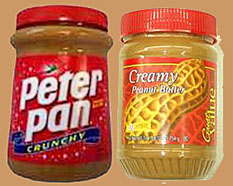
Sylvester, GA: The Washington Post has reported that the Food and Drug Administration (FDA) knew for years about contamination at the Georgia ConAgra plant which produced peanut butter that has sickened more than 400 people across the US.

In 2005, FDA inspectors were at the Sylvester-based plant to investigate complaints of an alleged episode of salmonella in a 2004 product. But when company managers refused to provide documents crucial to the investigation, the inspectors left and did not follow up.

Was the Outbreak Preventable?
At the time of the 2005 FDA inspection, ConAgra admitted to inspectors that it had destroyed some of its product in October 2004, without explaining why. FDA inspectors also stated in the report that "the firm didn't react to insects in some equipment, water leaking onto product, and inability to track some product."

But the FDA did not take action regarding the contamination until February of 2007, when the Centers for Disease Control (CDC) reported a spike in salmonella cases in states near the ConAgra plant. The FDA then contacted ConAgra Foods, which recalled all varieties of its Peter Pan and Great Value peanut butter manufactured at the plant.

This has led consumer advocates and lawmakers to wonder: could this outbreak have been prevented entirely with basic investigative follow-through?

Salmonella probe stretches to Rockford

Mexican-style cheese may be the source of an ongoing Salmonella outbreak since January 2006. Full story from William Prosecky of the Chicago Tribune

Chicago - State investigators are examining whether dairy products from the Rockford area may have been used to make salmonella-tainted cheese that infected nearly three dozen Kane County residents since January 2006, county health department officials said Tuesday.

Lab results received by the Kane County Health Department in late March pointed to some Mexican-style cheese sold in Aurora as the likely source of an ongoing salmonella that subsided after health officials seized the illegally manufactured cheese from three groceries in the city.

FDA Was Aware of Dangers To Food

In the day before Congressional Hearings, Elizabeth Williamson of the Washington Post Staff wrote that the Food and Drug Administration has known for years about contamination problems at a Georgia peanut butter plant.  Perhaps as concerning is that ConAgra knew of the Salmonella contamination as well and continued to produce peanut butter.


It will be interesting to see what ConAgra and FDA officials have to say for themselves.  Ms. Williamson's article is below in part.
In the peanut butter case, an agency report shows that FDA inspectors checked into complaints about salmonella contamination in a ConAgra Foods factory in Georgia in 2005. But when company managers refused to provide documents the inspectors requested, the inspectors left and did not follow up.

A salmonella outbreak that began last August and was traced to the plant's Peter Pan and Great Value peanut butter brands sickened more than 400 people in 44 states. The likely cause, ConAgra said, was moisture from a roof leak and a malfunctioning sprinkler system that activated dormant salmonella. The plant has since been closed.

The 2005 report shows that FDA inspectors were looking into "an alleged episode of positive findings of salmonella in peanut butter in October of 2004 that was related to new equipment and that the firm didn't react to, . . . insects in some equipment, water leaking onto product, and inability to track some product."

During the inspection, the report says, ConAgra admitted it had destroyed some product in October 2004 but would not say why.

"They asked for some of our documentation and we made the request to them that they put it in writing due to concerns about proprietary information," ConAgra spokeswoman Stephanie Childs said last week. "We did not receive a written request, . . . they filed the report and that was that."

Until February of this year. That's when the Centers for Disease Control and Prevention notified the FDA of a spike in salmonella cases in states near the ConAgra plant. The agencies contacted the company, which initiated a recall and shut the plant for upgrades.

Brackett said that if the FDA inspector had seen anything truly dangerous the agency would have taken further action. But, he said, the agency cannot force a disclosure, a recall or a plant closure except in extreme circumstances, such as finding a hazardous batch of product.

The problem in 2005, he added, "doesn't necessarily connect to the salmonella outbreak right now. It's not unusual to have it in raw agricultural commodities."

17,252 confirmed cases of food poisoning in 2006 in US

The CDC today released its preliminary 2006 food-borne illness data from 10 states: California, Colorado, Connecticut, Georgia, Maryland, Minnesota, New Mexico, New York, Oregon, and Tennessee. A total of 17,252 confirmed cases (actual cases may be anywhere between 20 and 30 times the confirmed cases) of food-borne illness were reported in those states in 2006, according to the CDC. The most commonly reported illnesses were:

Salmonella: 6,655 cases

Campylobacter: 5,712 cases

Shigella: 2,736 cases

Cryptosporidium: 859 cases

E. coli O157: 590 cases

E. coli non-O157: 209 cases

Yersinia: 158 cases

Vibrio: 154 cases

Listeria: 138 cases

Cyclospora: 41 cases

Events in ConAgra Peanut Butter Recall


By The Associated Press

Timeline of key events in ConAgra Foods Inc.'s recall of all peanut butter made at its Sylvester, Ga., plant:

August 2006 -- First cases of Salmonella Tennessee, the rare strain linked to this outbreak, are reported.

August 2006 -- Moisture invades ConAgra plant in Sylvester through a roof leak and the building's fire sprinkler system, which goes off twice because of a faulty sprinkler head. Company officials would later blame this moisture for helping salmonella bacteria grow in the plant.

Feb. 14, 2007 -- The Centers for Disease Control and Prevention announce that the salmonella outbreak is linked to Peter Pan peanut butter. The CDC and state health agencies had noticed a spike in cases of people sickened with the Salmonella Tennessee strain, and interviews with victims revealed peanut butter as a link.

Feb. 14, 2007 -- ConAgra announces a recall of all Peter Pan and Great Value peanut butter made at the plant. The affected jars all carried a product code beginning with "2111."  NOTE - The recall first was from August 2006 it was then extended back to October 2004 - Why?

Feb. 20, 2007 -- ConAgra estimates that its nationwide recall of peanut butter will cost between $50 million and $60 million.

March 7, 2007 -- CDC announces that 425 people in 44 states have become ill with Salmonella Tennessee. The onset dates for most of those cases range between Aug. 1, 2006, and Feb. 16, 2007. Two-thirds of those cases were reported between Dec. 1 and Feb. 16.

April 5, 2007 -- ConAgra releases findings of its investigation and blames moisture for helping salmonella spread. Company also announces plans to renovate the plant.
Despite the AP report, I have learned that the current Salmonella Tennessee case stool and urine positives (substantial numbers of ill people had urinary tract infections instead of stool cultures) have risen to 563 in 47 States. The first reported case is in August 2006 and remaining constant, but low, through September, spiking in October, November, December and then starting to trend down in January and February 2007. There does not appear to be a significant number of matched Salmonella Tennessee cases pre-August 2006 (ten in August and thirteen January to July 2006 and thirty cases in 2005) that are EPI-linked to Peanut Butter despite the recall date being extended to October 2004 (I am not aware of many matched Salmonella Tennessee cases in 2004, although there may well be a few).

We generally use the CDC estimates of unreported illnesses (caused by no or lost stool or urine cultures) at about 20 to 30 times the official CDC number (here 563 during the months of August 2006 and February 2007). We therefore think that the actual number of cases is likely to be between 11,260 and 16,89

Four Deaths tied to Salmonella


Federal health department officials will inspect a Melbourne nursing home as investigations continue into a food poisoning outbreak that killed four people.  Three men and a woman, aged in their 70s and 80s, died from salmonella-related gastroenteritis following the outbreak at Broughton Hall nursing home and hostel at Camberwell, in Melbourne's inner east.

State and federal health agencies and the Victorian coroner are investigating the deaths amid anger the outbreak was not reported to Victoria's Department of Human Services (DHS) until 10 days after the first detected case.  Twenty residents at the 30-bed commonwealth-funded home were affected by the illness, which was first detected on April 5.  Two people are recovering in hospital.

For more infromation on Salmonella, see www.about-salmonlla.com.

Attorneys finalize a probe into Sylvester's Peter Pan plant

Susan McCord of the Albany Herald wrote that:

About 15 investigators and attorneys gathered with ConAgra Foods attorneys outside the Sylvester Peter Pan plant Friday morning on a second day of inspections at the plant.

Personal injury lawyer Dave Babcock, from Seattle law firm Marler Clark, said he was accompanied by a sanitation expert who would make observations inside the plant on their second and final court-ordered day to inspect the plant.

Not long after, Plant Manager Earl Ehret requested that press leave ConAgra premises. Ehret took over as manager of the Sylvester plant earlier this year, days before the Food and Drug Administration linked a nationwide outbreak of salmonella to peanut butter produced there.

Ehret replaced Tom Gentle, who had managed the Sylvester plant for about three years. Gentle now works at another ConAgra facility, Ehret said.  Since the Feb. 14 recall, the FDA states that 425 people have been made ill by the peanut butter.  Last week, ConAgra announced its plans to completely renovate the Sylvester plant while it resumes production of Peter Pan at another location.  Peter Pan is expected back on store shelves in July, while the Sylvester plant is expected to be making peanut butter again in early August, ConAgra communication director Stephanie Childs said.


A few items of interest:

24)        Was asked by Engineer to look at dead rodent specimen in Maintenance Room
25)        Proceeded to Maintenance Room
26)        Observed decomposing desiccated rodent carcass (young rat or mouse)
27)        Request made to escorts to take rodent carcass as a sample
28)        Request denied by escorts
29)        Swabbed rodent carcass
30)        Found decomposed rodent remains including bones and other body appendages, hair
31)        Sampled decomposed rodent remains
50)        Was asked by a co-worker to look at a hole in an upper wall in an upper area of room
51)        Proceeded to upper area of mixing room
52)        Observed hole in wall penetrating to the outside
53)        Swabbed hole in wall
54)        Found bird feathers on pipe
72)        Swabbed food waste and bird dropping and a piece of suspected organic matter on roof surfaces

E. coli and Salmonella making a comeback in U.S., CDC says

Maggie Fox of Reuters reported today:
E. coli and Salmonella infections are on the rise in the United States, but other foodborne illnesses appear to have leveled off, the Centers for Disease Control and Prevention said on Thursday. But after falling sharply in 2003 and 2004 when the meat industry pulled together to make ground beef safer, rates of E. coli O157:H7 infections have rebounded, and many appear to be related to outbreaks in fresh produce, the CDC said.

"As recent outbreaks have shown, too many people in the United States are getting sick each year from foodborne illnesses," CDC Director Dr. Julie Gerberding told reporters in a telephone briefing. "For instance, the outbreaks involving tomatoes, lettuce and spinach underscore the need to more effectively prevent contamination of produce," Gerberding added.

Lawyers and investigators visit south Ga. peanut butter plant

Article by Greg Blustein. Full story

ATLANTA - An army of plaintiffs' lawyers and investigators is inspecting the south Georgia peanut butter plant linked to a salmonella outbreak that has sickened more than 400 people nationwide.

A team of attorneys, engineers, photographers, mapping specialists and videographers on Monday scouted the ConAgra Foods Inc. plant in Sylvester, Ga., that produced the Peter Pan and Great Value peanut butter recalled in February after the outbreak.

The Omaha, Neb.-based company said the company traced the salmonella outbreak to problems last August with a roof that leaked during a rainstorm and a sprinkler system that went off twice because of a faulty sprinkler.

The inspectors are also taking a look at the machinery throughout the plant, said Bill Marler, an attorney with Seattle's Marler Clark and one of several trial lawyers who organized the trip.
"When you do have a factory that's manufacturing this much product, there's some small glitch in the system and it gets amplified," said Marler, whose firm is representing more than 5,000 clients. "Hopefully what we look at here gives us a feel for how the contamination likely appeared."

ConAgra spokeswoman Stephanie Childs said moisture from faulty sprinklers and a leaky roof likely mixed with dormant salmonella bacteria in the plant that may have come from raw peanuts and peanut dust. Although she said the plant was cleaned thoroughly after the roof leak and sprinkler problem, the salmonella remained and somehow came in contact with peanut butter before it was packaged.

Salmonella poisonings have Campbell Co. officials on alert

A restaurant in Campbell County, Tennessee, is under investigation for a possible salmonella outbreak. The name of the restaurant has not been released. Full Story from Jeff Lennox, Channel 6 News.

The East Tennessee Regional Health Office has confirmed the three cases of salmonella poisoning. All three people ate at the same place on different days. But officials haven't released the name of the place.

Health department officials have interviewed all three people.

They've also inspected the eatery in question. But they say at this point, they don't have overwhelming evidence that it was the location where the food poisoning originated. So they won't say which place served the food.

Several residents in Campbell County tell 6 News they're concerned and wish they knew more about the source of the salmonella.

FDA Plans More Peanut Butter Inspections

Another ConAgra Salmonella article out of the AP in Omaha today:

The Food and Drug Administration said Friday it will increase the frequency of investigations at plants that make peanut butter and similar products, saying this year's salmonella outbreak showed peanut butter is riskier than health officials had thought.

The FDA last inspected the ConAgra plant in 2005 and did not find any problems.
"Up until this point, peanut butter has not been considered a high-risk food," said Dr. David Acheson, chief medical officer of the FDA's Center for Food Safety and Applied Nutrition. "We now know peanut butter can be a vehicle for salmonella."  Acheson said peanut butter will almost certainly move up on the FDA's list of high-risk foods, and the agency bases its inspection schedule on the relative risk of foods. He said peanut butter is not likely to knock fresh produce off the top of that list, because the risks are highest with foods that don't get cooked later.  Acheson said the basic process used at all peanut butter plants is similar. They all bring raw peanuts in, roast and grind them, mix and blend them, and put the product in bottles or cans. Acheson said it‘s possible some contamination happened before August, but the investigation probably won‘t be able to determine that.

"We do know that in a plant environment like that when you get moisture in there it makes it worse," Acheson said. "That‘s a logical explanation for why we suddenly saw it get significantly worse around that time of year.

"Whether it‘s the sole explanation, I don‘t think we‘ll ever know," he said.

The explanation for the salmonella outbreak ConAgra officials offered Thursday fits with what the FDA found, Acheson said, but the government investigation has not been completed.  FDA officials will decide whether to pursue any sanctions against ConAgra after the investigation, Acheson said.

What did ConAgra know and when?

I was alerted a few weeks ago that the roof at the Sylvester, Georgia ConAgra peanut butter plant had been leaking and that the sprinkler system had failed on a few occasions.  We then sought a court order requiring that ConAgra allow us in to view the roof before they tried to repair or replace it.   The court ordered the site visit tol be next Monday morning.  Interestingly, days before our visit, ConAgra spokespersons came clean with the leaky roof and Salmonella connection.  What more is out there?

See below.

ConAgra says moisture in peanut butter plant spread salmonella

Josh Funk of the Omaha Associated Press reported yesterday that ConAgra Foods said that moisture from a leaky roof and faulty sprinkler in its Georgia peanut butter plant last August allowed salmonella bacteria to infect its finished product and later sicken more than 400 people nationwide.

According to ConAgra spokeswoman Stephanie Childs, the company traced the salmonella outbreak to three incidents in its Sylvester, Ga., plant last August. The plant's roof leaked during a rainstorm and the sprinkler system went off twice because of a faulty sprinkler, which was repaired. The moisture from those three incidents mixed with dormant salmonella bacteria in the plant that Childs said likely came from raw peanuts and peanut dust. She said the plant was cleaned thoroughly after the roof leak and sprinkler incidents, but somehow the salmonella remained and came in contact with peanut butter before it was packaged. The company isn't sure exactly how the salmonella got into the peanut butter, but Childs said it was linked to the moisture. "At some point, the salmonella that was activated came in contact with finished peanut butter," Childs said.

ConAgra recalled all its peanut butter in February after federal health officials linked it to cases of salmonella infection. At least 425 people in 44 states were sickened, and numerous lawsuits have been filed against the company.

Leaky roof at ConAgra plant blamed in outbreak
Joe Ruff of the Omaha World-Herald also reported that moisture from a leaky roof and a faulty sprinkler at ConAgra Foods' peanut butter manufacturing plant in Georgia led to a salmonella outbreak that sickened more than 400 people nationwide. Last August, the roof of the Georgia plant leaked once and the sprinkler system went off twice because of a faulty sprinkler, allowing moisture into the plant, Childs said.

Despite extensive cleanup, Childs said, the moisture apparently came into contact with dormant salmonella from raw peanuts or peanut dust, and the bacteria became entrenched in some areas of the plant. Changes at the plant will include more separation between raw product and processed product to lessen the chances of contamination, Childs said. Food and Drug Administration officials have said salmonella was found on a roaster and some cleaning equipment.
ConAgra Foods Announces the Renovation of Its Peanut Butter Plant and Enhanced Food Safety Measures

ConAgra denies claims in peanut butter lawsuit

ConAgra, the producer that distributed salmonella contaminated peanut butter to thousands of consumers under the labels Pater Pan and Great Value, denies all allegations made in the class action lawsuit filed in Rome, Georgia.  Full story

Peanut butter producer ConAgra has denied all allegations made against it in a federal lawsuit seeking more than $5 million in damages because of alleged salmonella poisoning. The lawsuit and the corporation’s response have been filed in U.S. District Court in Rome.

Plaintiffs charge that the Delaware-based company distributed contaminated peanut butter that caused hundreds of consumers in more than 40 states to contract the illness and many to be hospitalized.

The Food and Drug Administration in February warned consumers about salmonella detected in peanut butter under the Peter Pan and Great Value labels made at the corporation’s plant in Sylvester.

Pet Treats With Salmonella Recalled

Eight in One is recalling pet treats for salmonella contamination. Some products tested positive for salmonella after a dog was infected with the bacteria.  Full Story

A pet food company announced Monday a nationwide recall of dog, cat and ferret treats that could be contaminated with salmonella. The bacteria could infect both animals and people handling the food.

The announcement is unrelated to the more extensive recall of melamine-tainted dog and cat food that led to kidney failure in pets around the country.

Eight in One Inc., a division of United Pet Group Inc., is recalling all packages of Dingo Chick'N Jerky, Dingo Kitty Chicken Jerky and Dingo Ferret Chicken Jerky.

PA Department Of Health Warns Consumers About Raw Milk Sold By York County Dairy

Consumers who drank milk from Stump Acres Dairy in Pennslyvania have been urged by the State Health Secretary to contact their physician for possible salmonella poisoning. Full story

State Health Secretary Dr. Calvin B. Johnson today advised consumers who purchased raw milk from Stump Acres Dairy of New Salem, York County, after March 19 to consider not consuming the raw milk due to possible health concerns.

A consumer who drank raw milk purchased from the dairy after March 19 experienced gastrointestinal illness. As a result, Stump Acres Dairy voluntarily stopped raw milk sales on March 27 as a precautionary measure.

In February, raw milk purchased at Stump Acres Dairy was linked to eight cases of infection with Salmonella Typhimurium and sales were suspended on March 2. On March 19, the dairy resumed raw milk sales following testing, cleaning and additional inspection.